Explain the Difference Between a Flat File and Relational Database
We can say that a flat file has the simplest easy to create inexpensive storage structure for data. A relational database uses multiple table structures cross-referencing records between tables.
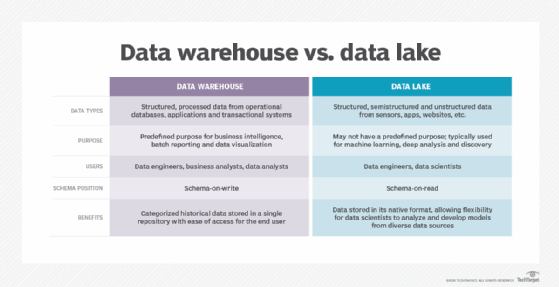
What Is A Flat File And How Does It Work
A flat file database contains information that as often as possible is stored in the order in which it is needed.

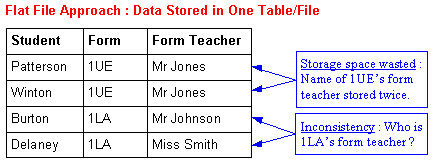
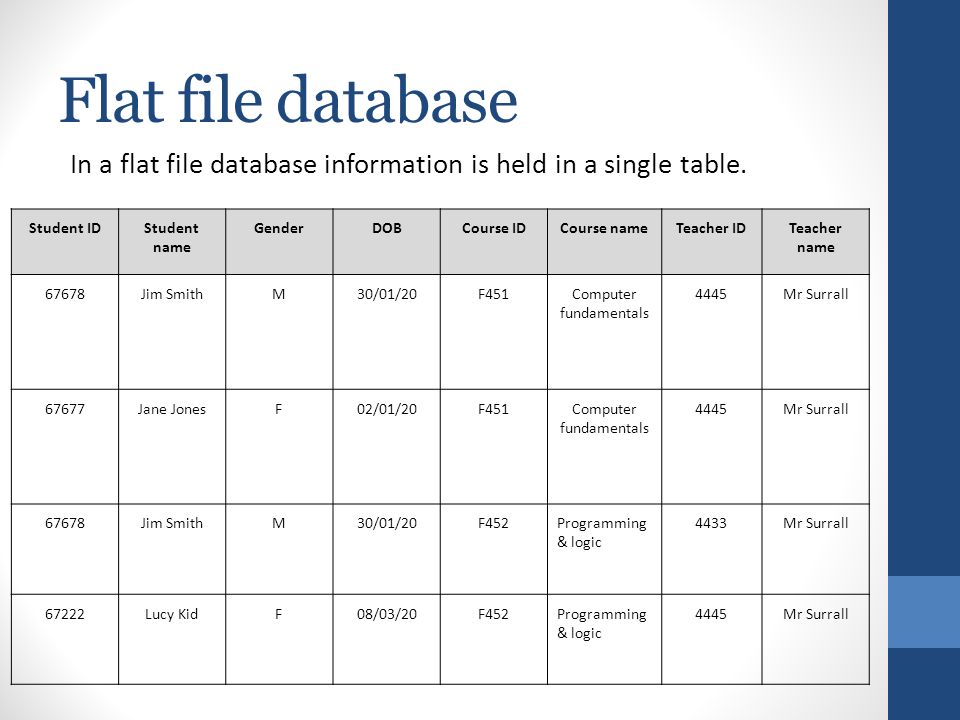
. Flat file does not give you any structure or at least relations if you are planning to build a database with multiple flat files. A flat file is conceptually the simplest storage format. A flat file database stores data in a single table structure.
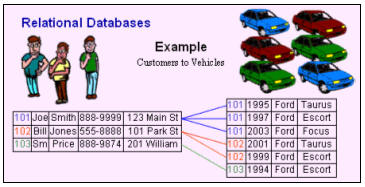
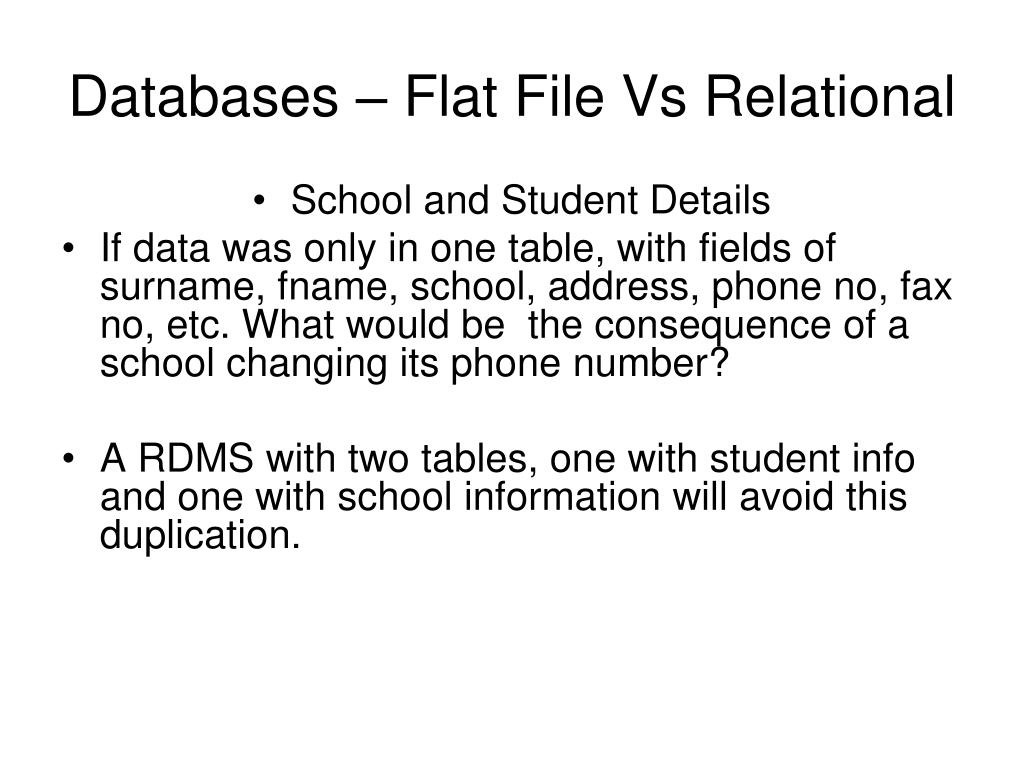
A relational database uses multiple table structures cross-referencing records between tables. Relational databases are generally more complex with varying costs but provide advanced capabilities and more efficient access options. A flat file system usually stores the same type of information over and over again whereas a relational database does not.
June 25 2011 Posted by Indika. Explain the difference between a flat-file database and a relational database. A relational database uses multiple table structures cross-referencing records between tables.
How it is retrieved does. Flat file databases include a single table whereas relational databases include multiple tables and have a more complex structure. The approach of a flat file database is contrary to the approach of a relational database in which how information is stored does not matter.
A flat file is one that stores a representation of a simple database which is known as a flat file database. A relational database may use a flat file behind the scenes for storage but provides a layer of abstraction to allow querying of the data and returning related records. A flat file database is a database designed around a single table.
A flat file is a text file that stores a single record per line with each piece of information separated by a comma its data structure is self-contained and limited. We could store one record per line in the flat file table. Relational databases require a structure to contain them referred to as a server in order to store and to interpret data.
A flat file may contain many fields often with duplicate data that are prone to data corruption. Relational database uses a Relational Database Management System RDBMS to access the data. The different columns can be separated or delimited by comma or tab.
While a database is a collection of data organized in a manner that allows access retrieval and use of that data. Tables in both organise records in rows with each column containing a single piece of data in the record. The flat file design puts all database information in one table or list with fields to represent all parameters.
Flat file database is used to store data in a single table structure. Flat files typically comprise text files with no markup representing relational data by separating it with a comma or other delimiter. Flat file databases are usually only practical for systems with small read or write requirements.
They should be able to normalise up to 3NF. In spite of these limitations flat-file databases are still widely used for scenarios where local processes need to store and organized small amounts of data. What is a Flat file.
With RDBMS we can relate multiple tables create parent child relationships enforce constraints index the data of a particular table etc etc. Table is useful for recording a limited amount of data. Difference Between Filesystem and Database.
Tables in both organize records in rows with each column containing a single piece of data in the record. A flat file database stores data in a single table structure. Flat file database can be accessed by a variety of software applications.
Flat files use techniques such as keeping track of pointers from one set of information to another. Tables in both organize records in rows with each column containing a single piece of data in the record. While a flat file contains only a single table a relational database stores data in multiple tables consisting of columns of key values and stored values enabling the possibility of relating one table to another.
This distinction makes flat file databases different from relational databases also known as SQL databases which typically. Candidates should know the difference between a flat file and a relational database and be able to explain the benefits and limitations of each approach. A flat file is a form of data storage where you can store linear data.
Solutions for Chapter 7 Problem 1IDSQ. Records are stored line by line with no structural relationship between them. For example many operating systems use flat-files to store configuration data.
Explore the composition and application of each type of database. Data is a collection of unprocessed items which can include text numbers images audio and video. What is the difference between flat file and relational databases.
Get solutions Get solutions Get. Flat-file databases are simple and are essentially free but limit data access to manual processes andor structured programs. We can consider a spreadsheet or a simple table data as one of the easiest.
Candidates should be able to use Normalisation to produce a suitable database schema and explain the benefits of doing so. Database and File System are two methods that help to store retrieve manage and manipulate data. Relational database is used to store data in a multiple-table structure.
Relational databases however store data in tables that are structured for the needs of the data. A flat file database stores data in a single table structure. So logically we deal with tables and relations between tables.
But a large flat-file database can be inefficient as it takes up more space and memory than a relational database. Difference Between File and Database is that a data file is a collection of related records stored on a storage medium such as a hard disk or optical disc. The key difference between filesystem and database is that filesystem manages only the physical access while database manages both the physical and logical access to the data.
Flat File Database Design vs. Difference Between Flat File Relational Database.

Difference Between Flat File And Relational Database Brainly In
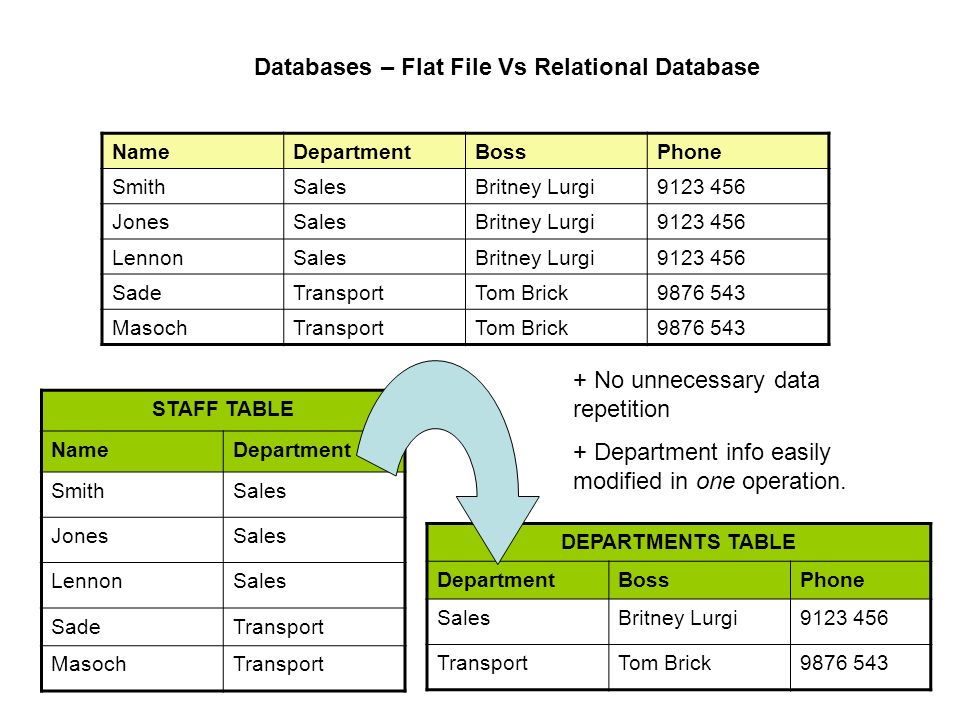
Database Relational Vs Flat File Databases Structure Flat File Database Contains Only One Table Relational Database Contains More Than One Table Ppt Download
Differentiate Between Flat File And Relational Database Brainly In
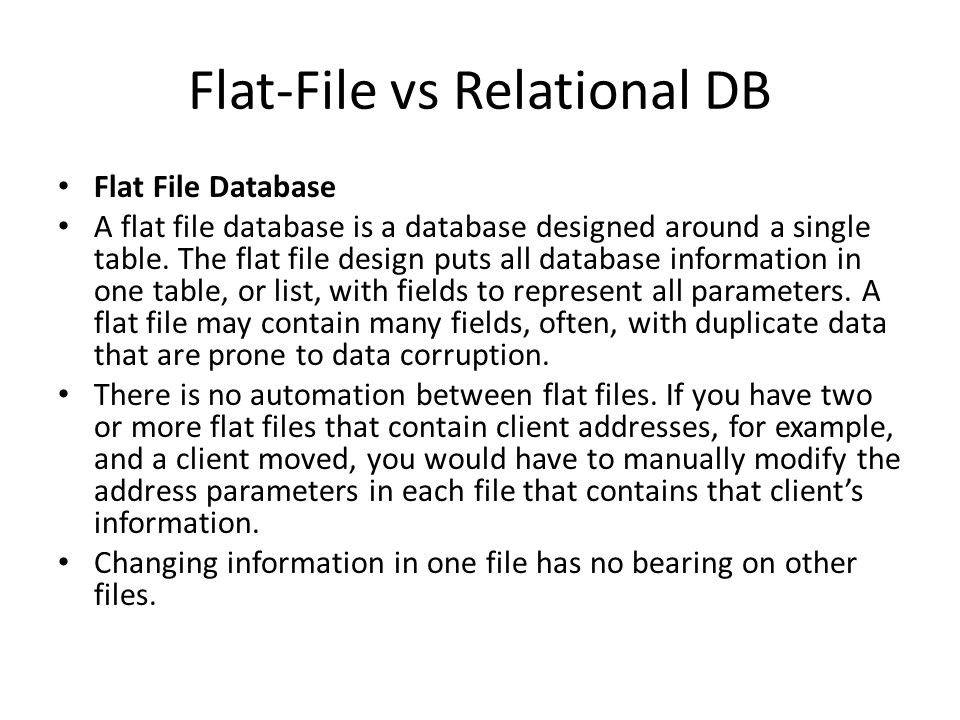
Database Concepts Advanced Flat File Vs Relational Db Flat File Database A Flat File Database Is A Database Designed Around A Single Table The Flat Ppt Download
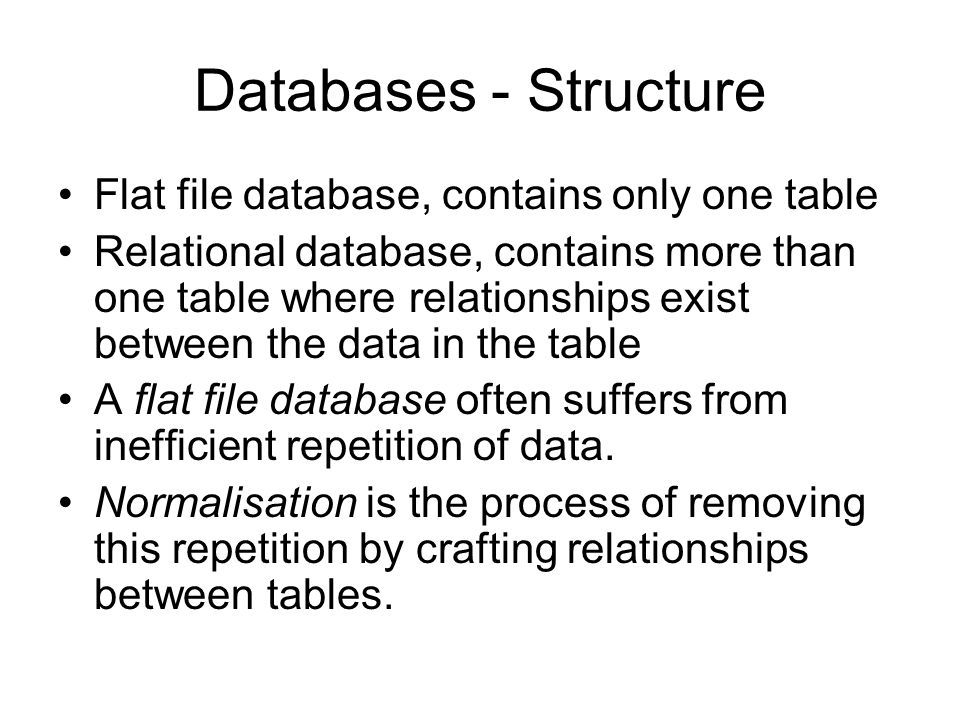
Database Relational Vs Flat File Databases Structure Flat File Database Contains Only One Table Relational Database Contains More Than One Table Ppt Download
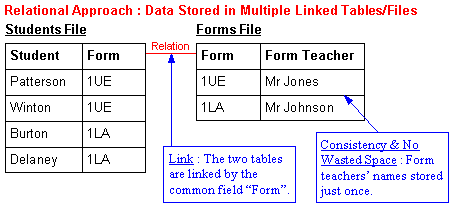
Databases Relational Vs Flat File

Relational Databases Advantages Over Flat Files A Level Computer Science Youtube

Selecting A Marketing Data Management Platform For Your Business By Anubha Bhargava Medium

Igcse Ict Types Of Databases
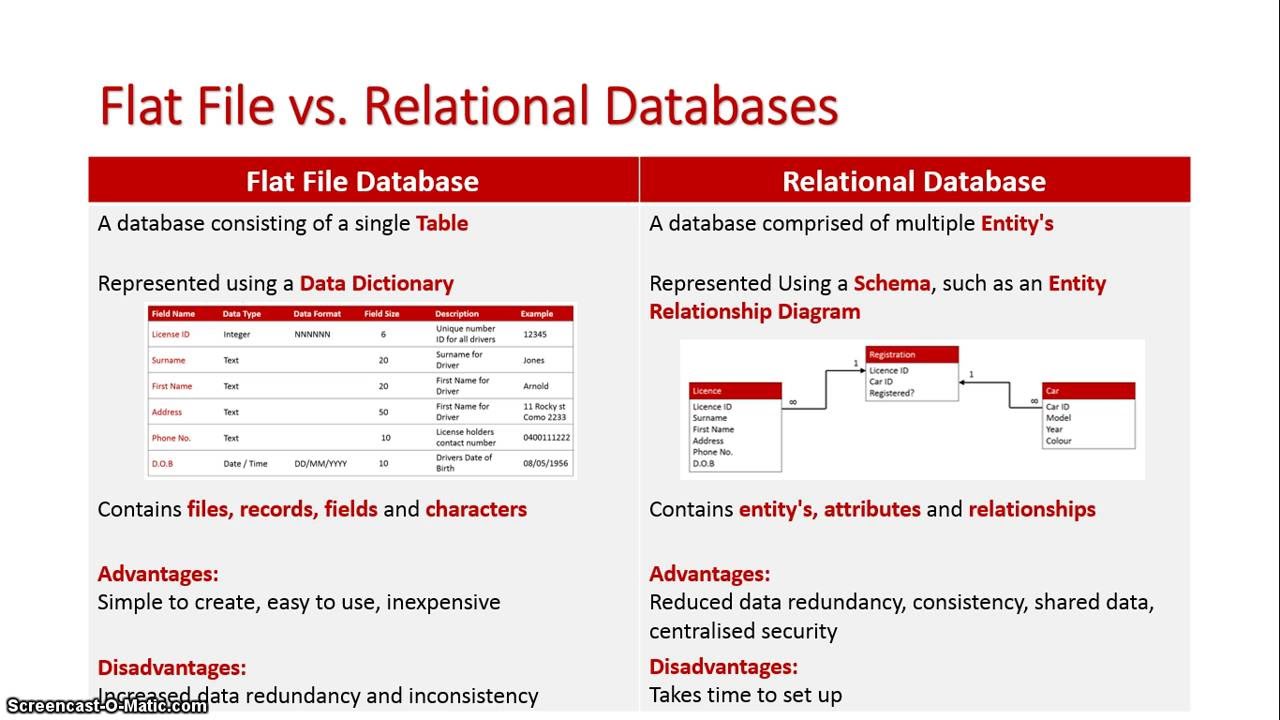
Flat File Vs Relational Database Models Youtube

Flat File Databases

Flat File Database Vs Relational Database Video Lesson Transcript Study Com
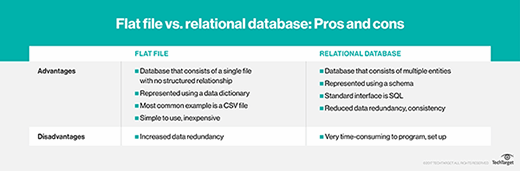
What Is A Flat File And How Does It Work
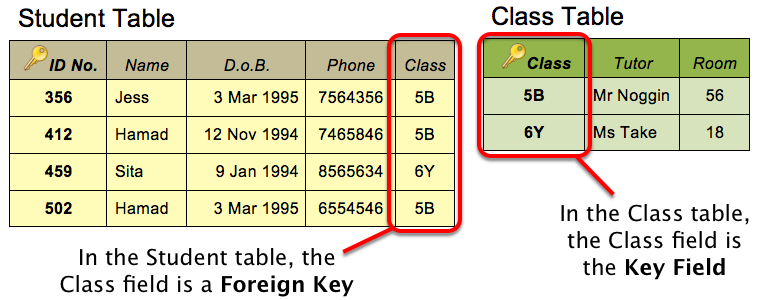
Igcse Ict Types Of Database Igcse Ict
Databases Relational Vs Flat File
Microsoft Access 201 Relational Databases Multi Table Queries Global Relationships Combo Boxes

Microsoft Access Database Think Relational Not Flat With An Access Database
Flat File And Relational Databases Flat File Database In A Flat File Database Information Is Held In A Single Table Student Idstudent Name Genderdobcourse Ppt Download
Ppt Database Relational Vs Flat File Powerpoint Presentation Free Download Id 2378501


Comments
Post a Comment